Performance: Where do I come from? Que de donde vengo? // Group 6, Live Blog Post #2

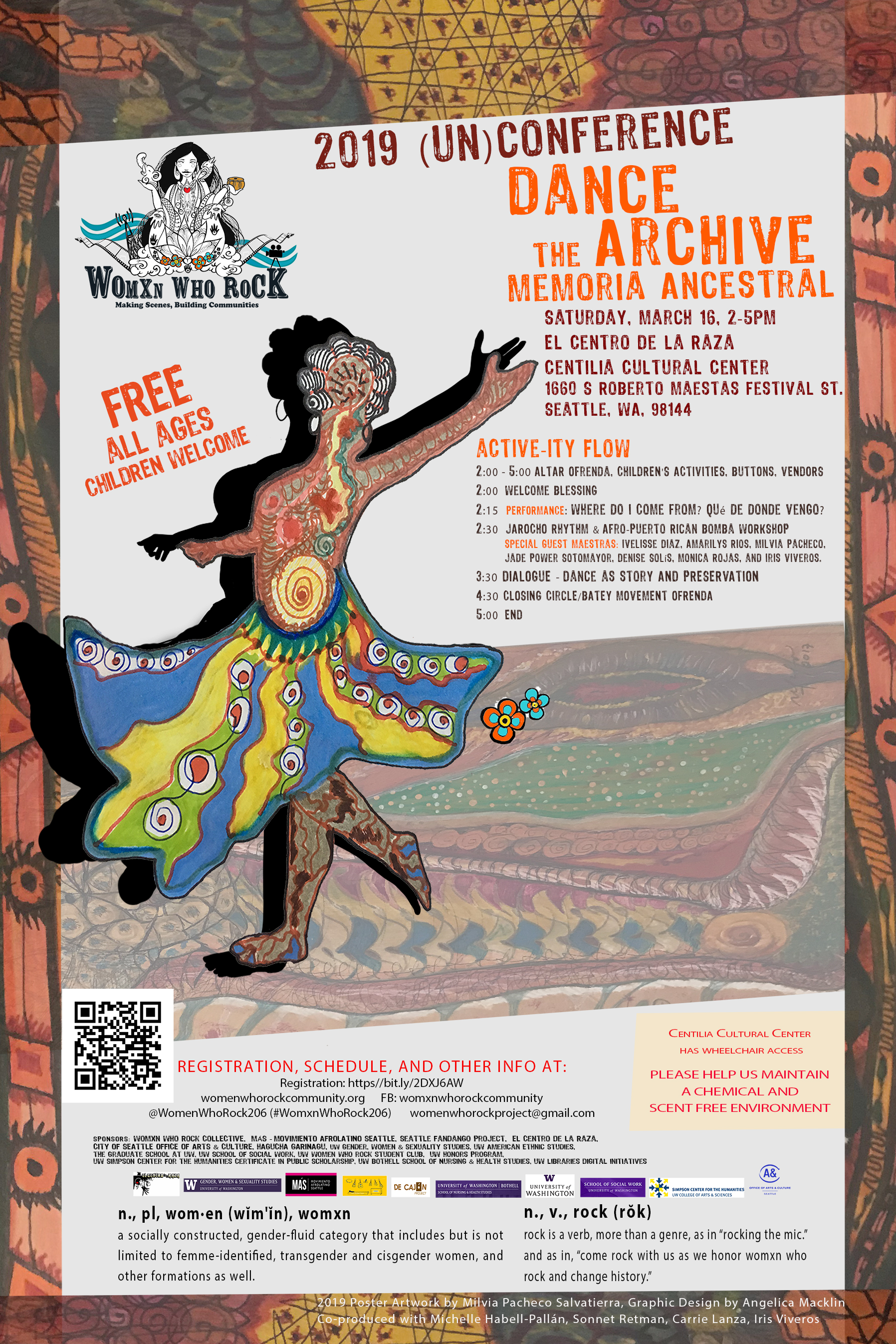
The first performance was a raw and real. It captures the yearning of an entire community, reclaiming voices to be powerful and bold and uncovering years of trauma through creative practices. It was so emotional because of the simplicity of the performance. It was bare feet hitting against a wooden board. The women wore white, their hair down, their arms flying as they moved their skirts in a wave. The lyrics were simple but I felt such an impact because of the emotional trauma that came through when speaking of where she came from. Shouting, we come from “una historia vieja, mala contada”, from “los sueños de nuestros ancestros”, it’s honoring the knowledge that came before us and the history that has been tainted. This powerful performance was a way to integrate women power through the feminine sounds of the rhythms while weaving the knowledge of their indigenous heritage.

In search of her identity, she revealed to is that in the uncovering of stories that have not been told, we will find our medicine. In the search of identity, you begin to find what society has placed on you, the restriction and expectations that stray us from our actual self. It’s this journey of self discovery that will dismantle judgements and free our true nature, our true selfs. 

AFRAM 337 Live Blog Post 1 – Jason Scrempos

It has been a really cool experience so far, the atmosphere here is something very special and different. To start the event off we are learning about some of these musicians, dancers, and artists up on the stage. They are being introduced by our professor, explaining all the things they have accomplished and done throughout their lives and what they are doing now. The women that are being introduced are very involved and really care about this event a lot. They are doing a drumming performance right now and showing us all the traditions that they have grown up and been through in their lives. They are explaining that these traditions are things that have been passed down from generation to generation.  Now all of the people that have came here today are coming together and dancing as a group. They are about to show us a few of their dance traditions.

Group 7 Women Who Rock (un)Conference Live Blog

Walking in, I feel an immediate warmth surrounding me. Not just from the people greeting me, but from the white sage scent and bright colors everywhere, getting me excited for the event to start. The paintings and decorated tissue paper is making me jump out of my seat. Evelyn Mikayla Martin(spelling may be wrong), a student at the University of Washington who is actively involved, came up first with an opening statement. I did not know that we were on Native American property, so that was very intriguing. I thought the art on the walls was very interesting because it is a graphic campaign started in Mexico by women bringing attention to gender violence which is very important. Some of the themes for this year are power of women and community, and the power of the rhythm. The first dance starts with a fiery passion of two women locking eyes and stomping their feet in a passionate rhythm. Their feet are stomping faster and faster making more of a beat. Singing has started, smiles are on their faces and hips are moving. The dance ended with a genuine hug between the two dancers and they mention that the dance is “Where do I come from” and is a piece about identity.

Arriving at the event! //Group 6, Live Post #1

Arriving at the 9th annual Women Who Rock event, the vibe in the room is buzzing. The lively music sets a light mood while scattered conversation and laughter comes from every corner. Our professors are beaming, a mixture of nervous and giddy excitement, they’re ready to get the event up and going. A beautiful ofrenda sits at the front of the room. Yellow and orange paper flowers decorate the alter along with delicate piece of papel picado. Portraits, pictures and art work capture the loved ones that we wish to celebrate and honor. The ofrenda perfectly captures the essence of honoring and spreading ancestral knowledge because it’s a direct connection with those who have passed.  By continuing to acknowledge their existence for decades, the ofrenda is a way to explore the duality of human existence. 

Starting off the event with a blessing and cleansing of the room, I felt at peace. It was amazing to be a part of thanking the space and thanking all of the happiness that will be created through song, dance, and conversations. Acknowledging that we are in sacred space and on sacred land, it was important to honor those who have been here before us and those who are overlooked and silenced. What an amazing kick off to this event! 

Womxn Who Rock Conference Live-Blog Group 15 Post 1

The calm before the storm

Just putting the final touches on set up here at the Womxn Who Rock 2019 before the big crowds show up. Very cool to see the immense amount of care that has gone into the production of the stage decorations here. Thank you of the volunteers and everyone involved in set up! Extremely grateful to all of the speakers and performers and teachers who have come all this way to our Seattle community. I look forward to learning and connecting with different people. Vendors are in place and showing off amazing artwork towards the entryway. Let the (un) conference begin!

Feminista Encuentro pt 2. Hyping each other up as a means of empowerment. By Jenesis García

Hyping each other is a colloquial and culture term that means empowering each other when we take pictures. The way that looks like is when someone is taking a picture and we all help to raise her self esteem. As a collective we are all telling her she looks beautiful. We do this through phrases like YES QUEEN!!

Once we had finished the discussion with the feminist hip- hop artists we organically transitioned to taking pictures of each other. My heart felt joy as we were doing this. It was a praxis of being there for one another. And destroying the patriarchy. Yes, sounds wild. Although this is true because many of us women are defying western standards of beauty through being confident for the wholeness that we are. We have been fragmented and made guilty for being a women.

Hyping each other up is an expression of being there for one another. Which also breathes the same air as Buen Vivir, Sumak Kawsay. Hyping each other up is also an expression, in the same way that the feminist hip- hop artists use rap as an avenue of liberation.

Feminista Encuentro in Ecuador by Jenesis García

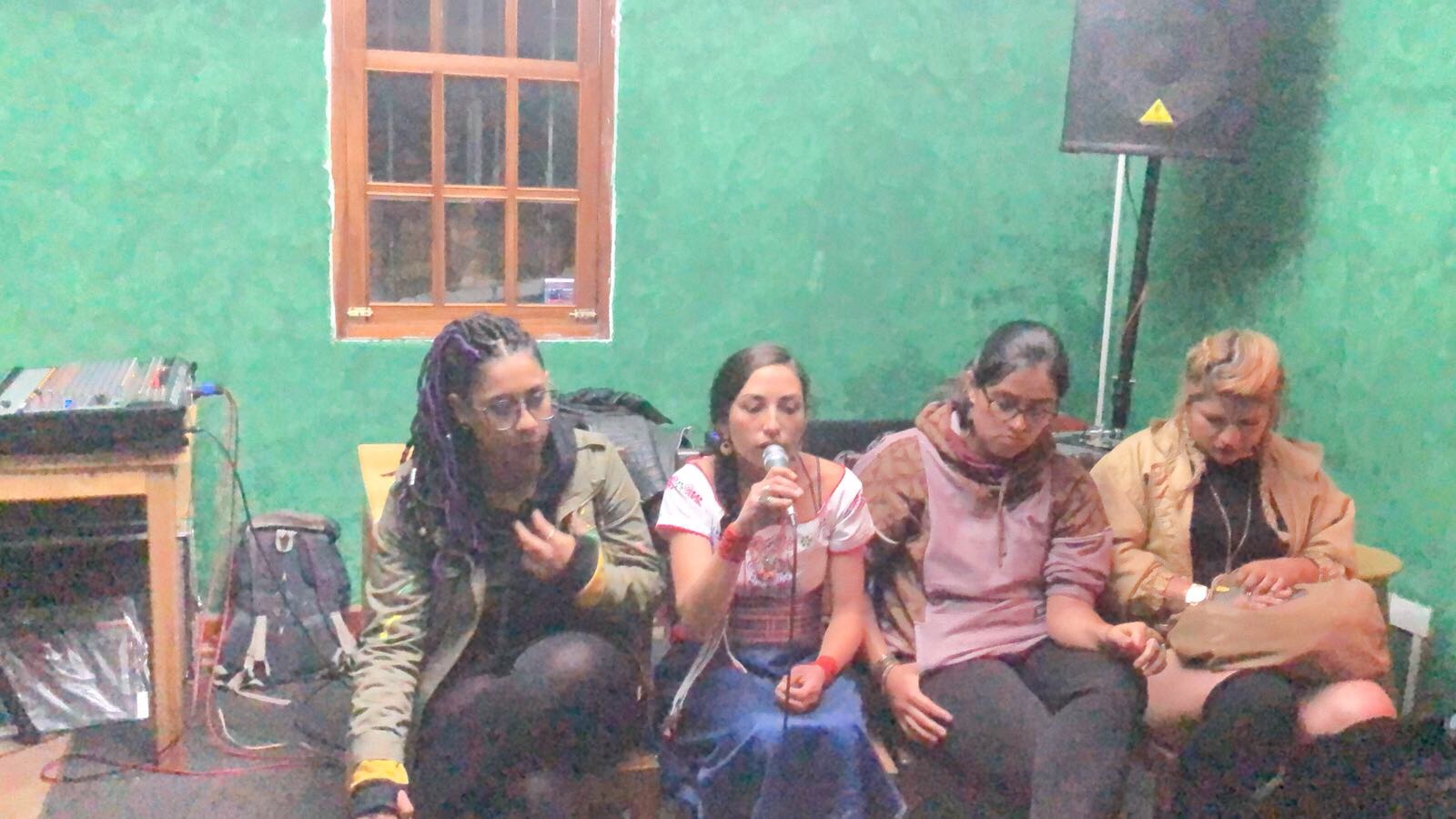
Left to Right: Ana Cano Black Mama, Taki Amaru, Calle Cayejera, Yeka Libre.

August 17, 2018

It’s such a profound experience to gather powerful women in the hip-hop community for the cause of feminism. This picture was taken when the question was asked. How can hip- hop be used as medicine. Taki Amaru responded the following. “I use it as a vehicle to give the messages that my spirit needs to give”. I interpreted this as something that does not make up her entire life but it’s a tool that she freely uses to be able to transform her life. And so many of us use various tools to be able to create the lives we want to live. They express their truth through word and through rhythm. And at the same time they bring us all together to resonate and dance to their messages.

2018 Feminista Encuentro Live Blog

In a small room of the DOMMO Cultural House, UW students and professors, Ecuadorian community members, and four feminista hip hop artists gathered for the 2018 Feminista Encuentro. Professor Michelle Habell-Pallan began by thanking everyone for coming and introducing the artists of the night, Ana Cano aka Black Mama, Taki Amaru, Cayetana “Caye Cayejera” Soloa, and Jeka Libre. Each feminsta artist then took time at the mic to introduce themselves, their work, and gave us a glimpse into their political and personal motivations as artists. Black Mama began by acknowledging that we, as students, have been talking and learning about feminism and politics, but this would be a night to see what they do for a living and see what they do for the struggle. Taki took the mic and thanked everyone for the opportunity to share her experience as a rapper and to use her music and message as a channel to share the dream and reality of being Runa. Caye acknowledged that she speaks in Spanish because she comes from a colonized country. She also recognized the students and professors in the room and said that the world of academia has a responsibility to not forget about the past or people and experiences that are so often undervalued. Thus, those within “the academy” must question where information within the academy comes from and realize that equally, if not more, important information comes from social work, education, and people in the streets. Jessica aka Jeka Libre finished off the introductions, saying how happy she was to share her hip hip because it is her way of expressing herself and expressing what so often remains unheard. They all mentioned how important our present day is in the modern feminist movement, and as we continued with the discussion, the heaviness and progress of these womens’ careers became even more evident.

The question and answer discussion session began, and when asked how we can strengthen the feminist hip hop movement, Black Mama talked about how commercialized the hip hop industry has become. Consequently, the artists and the music itself have been managed without thinking of the artist or even the public. She said that of course you want to show your art, but at a certain level you cannot continue without being paid in money. Because of this, they have started hosting and organizing concerts with women artists and treating them very well. They want to create an industry where, regardless of femininity or masculinity, artists and music are respected and treated well. Caye then began speaking on hip hop as medicine, but the issue of capitalism and industrialization in music continued. She said feminist hip hop artists are trying to find a balance between getting compensated fairly and politicizing her art but not letting it become industrialized or merchandized. Her motivation is not commercial, it is political. Until now, we have not had a feminist perspective of viewing or producing arts, so it has been under the control of the patriarchy. Because of this traditional means of production and consumption, creating places for women inside the hip hop industry is necessary in order to popularize a feminist way of seeing art.

Group Name: BroadeningMindAbroad

Leslie-LIVE BLOG : Group Wanderlusterabroad716

Live Blog 1:

We are here at the 2nd Feminista Hip Hop Encuentro & dialogo in Quito Ecuador. We are accompanied by Ana Gabriel “black mama”,Taki Amaru, Cayetana Saloa “Caye Cayejera” and Jessica “Jeka Libre” and the UW 2018 honors Ecuador study abroad cohort. Black Mama starts us off by sharing the importance of holding this event again and that this is an opportunity for us to see their work and what they are fighting for and the form this works takes place. Taki Amaru adds in by sharing the importance for them to be able to transmit and share their experiences as female rappers is a a way to transmit and use the music as a channel to share their messages, specifically for Taki Amaru the history and present of being a “Runa”. 

Following in introductions Cayetana shares how she will be speaking in Spanish because she’s from a place that has been colonized. Cayetana shares how she wishes she could speak and present in the language in her blood. She admires Taki Amaru and her ability to speak in kichwa and both find and know her identity. In answering what brought her to this type of work Cayetana shared how she considered her self as s person who had been undervalued but that she has had the ability to lift herself up through Hip-Hop music. She stated how this is a important moment for feminism, feminism is changing things. There is a awakening happening and she is happy to see the large group of females at the encuentro today. She stated that there is a significance in women coming together and empowering themselves. And that we hold a responsibility, that responsibility being not to forget the social work , the community and what individuals are doing, specifically feminist because it is about changing the logic and oppressive structures. Cayetana also shared that if we are in war she is she is giving her battle through her lyrics.

Here are a few impactful words shared by Black Mama in previous dialogues that resonated with the encuentro today. “Women have been in charge of sharing the culture” & “Being in a community means being able to interchange knowledge”. This encuentro showed how Hip Hop here in Quito is very much political and how both art and music have power. These women show us what inclusive feminism looks like. they raise their voices and open the possibility for these needed dialogue exchanges.

Live Blog #2

Ana Garcia AKA Black Mama begins sharing the struggle female rappers face in receiving what they need to have the means to continue with their work. She shares how many do not think about the artist. How some venues do not want do pay the artist, but rather offer payment through another form. This makes it difficult for females rappers especially because as artist they want to show their art they want to spread their message  regardless of the circumstances. However once they achieve a certain level they need to be able to find a way to receive a salary for their work. In order for them to have a industry they need money, thus what women are doing in the Hip-Hop.  movement is spreading this same information and holding their own concerts and treating the artist as they should be treated and giving the artist what they deserve, such as good sound and water, the things they need to give a good show. Black Mama also added how women do not make Hip-Hop about feminine or masculine ideals, but they are doing this because “Hip- Hop needs to learn to live in community”. Black mama continued by saying how sadly Hip-Hop is accustomed to a hierarchy of who has the possibility to make it and who does not have the possibility to make it. For those who do not have the means or possibility to make it and are talented it becomes a impossible path. What we need is for artist to be treated respectfully and be given what they need and for the public themselves to realize they deserve it.

To conclude the event all Feminist Rappers shared a few of their themes. Jessica “Jeka Libre” started the group then followed Cayetana Saloa “Caye Cayejera”,Taki Amaru who rapped in both Spanish and Kichwa and Black Mama. The feminist rapped about their rights, exploiting practices, women losing fear and in being in control/command of their own bodies. #furia de la mujer #no solo soy mujer #en mi cuerpo mando yo